Ahl-e-Bayt

The Secret Phase of Preaching| prophets in islam

prophets in islam

Prophets in Islam from Adam (A.S) to Noah (A.S), Ibrahim (A.S), Musa (A.S), and Isa (A.S) delivered divine guidance to their people. But none has influenced the world like Prophet Muhammad (PBUH), the final messenger. This article explores how the Islam religion text began to spread secretly in the early years, who the important people in Islam were at this stage, and what this period means in the grand history of Islam.


The First Revelation and Beginning of Prophethood

In 610 CE, in the Cave of Hira near Makkah, Prophet Muhammad (PBUH) received the first revelation through the angel Jibreel (Gabriel). The words “Iqra’ bismi rabbika alladhi khalaq” (“Read in the name of your Lord who created…”) marked the beginning of the Islam religion text, now known as the Quran. This event was a turning point in the spiritual history of mankind and the first step in the mission of the final Prophet of Islam.


The Secret Phase of Preaching (610–613 CE)

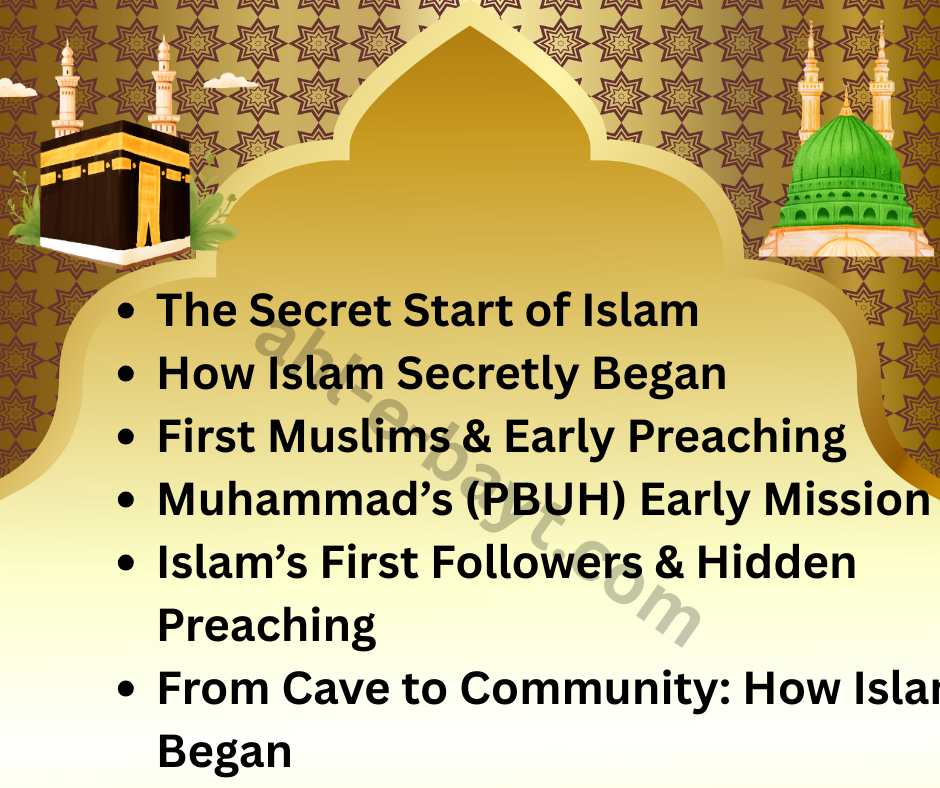
For the first three years, Prophet Muhammad (PBUH) preached Islam secretly. He was commanded to spread the message cautiously to avoid the immediate backlash of the Quraysh, who were deeply rooted in idol worship.


Why Secrecy?

  • Makkah was hostile to any challenge to its religious structure.

  • The early Muslims were few in number and had no political or tribal support.

  • Secrecy allowed the message to reach people slowly, sincerely, and safely.


Important People in Islam During the Secret Phase

Some of the most important people in Islam accepted the religion during this phase. Their courage and faith laid the foundation for what would become a global faith.

1. Khadijah bint Khuwaylid (RA)

  • The first believer in Islam.

  • Wife of Prophet Muhammad (PBUH) and his greatest emotional and financial support.

  • Her faith and loyalty gave the Prophet (PBUH) immense strength.

2. Ali ibn Abi Talib (RA)

  • The first child to accept Islam.

  • Raised in the Prophet’s household.

  • Became one of the most knowledgeable and courageous companions.

3. Abu Bakr As-Siddiq (RA)

  • The first adult male to embrace Islam.

  • A key figure among the companions and later the first Caliph.

  • Through his efforts, many influential people also became Muslims.

4. Zayd ibn Harithah (RA)

  • The adopted son of Prophet Muhammad (PBUH).

  • Among the first to pray with the Prophet (PBUH).

5. Uthman ibn Affan (RA) and Abdur Rahman ibn Awf (RA)

  • Wealthy and respected companions who embraced Islam early and supported it with their wealth.


The Role of Dar al-Arqam

As more people embraced Islam, Prophet Muhammad (PBUH) chose a safe location for teaching and prayer: Dar al-Arqam  the house of Arqam ibn Abi Arqam near Mount Safa.

  • It became the first Islamic center.

  • Here, new converts learned about the Islam religion text (Quranic revelations).

  • It served as a training ground for future leaders of Islam.


Key Themes in Early Islam

The early teachings focused on:

  • Tawheed (Oneness of God)

  • Akhlaq (Character and morality)

  • Life after death

  • Justice and equality

  • Prayer and worship

These concepts were radical at the time, challenging tribalism, idol worship, and economic exploitation.


Quranic Verses Revealed During This Time

The early verses of the Quran were short, poetic, and powerful. They addressed:

  • The majesty of Allah (e.g. Surah Al-Alaq, Surah Al-Muddathir)

  • Reflection on nature and creation

  • Warnings against arrogance and injustice

These verses formed the foundation of the Islam religion text, which would continue to be revealed over 23 years.


Reactions of Quraysh

Even during this secret phase, rumors about a new message began to spread. The Quraysh grew concerned, especially when respected figures started converting to Islam.

However, because the message was still private and had not challenged the Quraysh publicly, they did not yet respond with full force.


Strategic Wisdom of Prophet Muhammad (PBUH)

Prophet Muhammad (PBUH) showed immense wisdom during this phase:

  • He personally invited trustworthy individuals.

  • He avoided public gatherings that could trigger conflict.

  • He focused on building a core group of faithful believers.

This laid a strong base for the later, more public mission.


The End of the Secret Phase

After nearly three years, Prophet Muhammad (PBUH) received the divine command:

“And warn your closest kindred.” (Quran 26:214)

This marked the transition from private preaching to public dawah, beginning a new and more challenging chapter.


Legacy of the Early Preaching Phase

  • Introduced the world to the final Prophet of Islam.

  • Built the first Muslim community.

  • Proved that real change begins with faith, patience, and people – not power.

  • Highlighted the bravery of the important people in Islam who embraced truth despite danger.


Conclusion

The early preaching of Islam was a period of silence, strength, and strategy. It reminds us that even the greatest missions begin quietly, with conviction in the heart and trust in God.

From the first words revealed in the Islam religion text, to the earliest believers who shaped the ummah, this phase is one of the most powerful chapters in the story of Islam.
Join Us on Social Media

The Declaration of Prophethood|Islamic Prophets

Islamic Prophets

Islamic Prophets have guided humanity throughout history, each delivering a message of divine truth. Among them, Prophet Muhammad ﷽ stands as the final and greatest messenger, completing the legacy of all who came before him. At the age of 40, he received his first revelation, a moment that marked the beginning of a global spiritual revolution.

This post explores that divine moment and how it defined his role among the most revered Islamic Prophets.


The Mission of Islamic Prophets Before Prophet Muhammad ﷽

Before Prophet Muhammad ﷽, a long line of Islamic Prophets had come with messages of guidance, monotheism, and moral reform. From Adam to Nuh (Noah), from Ibrahim (Abraham) to Musa (Moses), and Isa (Jesus), each was sent to lead their people toward truth and righteousness.

Their missions, though distinct in detail, shared core themes:

  • Worship of one God

  • Justice and compassion

  • Truth and patience

  • Calling people away from idol worship and corruption

Prophet Muhammad ﷽ was chosen to complete and seal this chain of Prophets with the final revelation.


Revelation Begins in Cave Hira

In the spiritually barren environment of Makkah, where idol worship and injustice were rampant, Prophet Muhammad ﷽ would retreat to Cave Hira for reflection and worship.

There, during the month of Ramadan, Angel Jibreel (Gabriel) 💚 appeared and commanded:

“Iqra!” (Read!)

The Prophet ﷽, unlettered, responded:

“I am not one who can read.”

After three repetitions and a firm embrace, the first verses of Surah Al-‘Alaq were revealed:

“Read in the name of your Lord who created…”

This marked the beginning of the Qur’an, the final divine book, and a new chapter in the story of Islamic Prophets.


Support from Family and Early Believers

Overwhelmed by the experience, the Prophet ﷽ returned home to Khadijah bint Khuwaylid رضی اللہ عنہ, who comforted and reassured him. She became the first believer.

Khadijah took him to her cousin Waraqah ibn Nawfal, a knowledgeable Christian. Waraqah confirmed the experience:

“This is the same angel who came to Musa (Moses). If I live to see your mission, I will support you.”

Among the early believers were:

  • Khadijah (his wife)

  • Ali ibn Abi Talib (his cousin)

  • Zayd ibn Harithah (his adopted son)

  • Abu Bakr as-Siddiq (his close friend)

Through Abu Bakr, others like Uthman, Talha, and Zubair accepted Islam.


The Early Call of an Islamic Prophet

For the first three years, the Prophet ﷽ called people to Islam secretly. These years were about:

  • Building trust and faith

  • Teaching core values: monotheism, kindness, humility

  • Avoiding open conflict with Quraysh

The focus of this period was on strengthening hearts.


Public Declaration of Islam and Its Impact

Then came the command:

“Proclaim openly what you are commanded…” (Qur’an 15:94)

The Prophet ﷽ ascended Mount Safa and gathered the Quraysh tribes. He asked:

“If I told you an army was behind this hill, would you believe me?”

They said, “Yes. You are Al-Ameen.”

He then said:

“I am a warner to you before a severe punishment.”

Abu Lahab, his uncle, mocked him. In response, Allah revealed:

“Perish the hands of Abu Lahab…” (Surah Al-Masad)

This public call sparked strong reactions, marking a bold phase in the Prophet’s mission as one of the final Islamic Prophets.


Opposition and Steadfastness

As the message spread, so did opposition. The Quraysh tried to:

  • Bribe the Prophet ﷽ with wealth and status

  • Intimidate and torture believers

  • Boycott Muslims

  • Spread false propaganda

Still, the Prophet ﷽ stood firm, saying:

“Even if they placed the sun in my right hand and the moon in my left, I would never abandon this mission.”

This shows the same determination shared by previous Islamic Prophets, who never compromised truth.


Lessons from the Life of the Greatest Islamic Prophet

The declaration of Prophethood teaches us that:

  • Truth always meets resistance

  • Patience is a sign of strength

  • Support from loyal companions is a mercy

  • A small, sincere group can bring massive change

  • One man can illuminate the world when guided by divine light


Conclusion: A Light for All Humanity

The declaration of Prophethood was a defining moment not only in the life of the Prophet Muhammad ﷽ but in the mission of all Islamic Prophets. It was the final echo of divine guidance that sealed centuries of revelation.

Today, we continue to learn, reflect, and grow from this light.

Share this post so others may connect with the message of the final Prophet ﷽ and the legacy of all Islamic Prophets.

Join Us on Social Media

Among the Greatest Islamic Prophets

Islamic prophets

Early Life of Prophet Muhammad ﷺ  Among the Greatest Islamic Prophets

Prophet Muhammad ﷺ, the final messenger in the line of Islamic prophets, was born in 570 CE in the holy city of Makkah. His early life holds deep spiritual, emotional, and historical importance not just for Muslims, but for anyone studying the Islam religion and its divine lineage of messengers.


His Birth and Noble Lineage

The Prophet ﷺ was born into the respected Quraysh tribe, specifically the Banu Hashim clan. His father, Abdullah, passed away before he was born, and his mother, Amina bint Wahb, nurtured him during his early infancy. At birth, he was named Muhammad, meaning “the praised one.”

According to authentic narrations, his grandfather Abdul Muttalib took responsibility for naming and protecting him. These early days were filled with the love of a family who knew they were raising someone destined for greatness.


Foster Care with Halima Saadia

In Arabian tradition, noble families would often send their newborns to the desert to be raised in a healthier environment. The Prophet ﷺ was given into the care of Halima Saadia from the Banu Saad tribe. During her care, her household witnessed unprecedented blessings — their livestock flourished, and their home was filled with barakah (divine blessings).

Halima grew to love the Prophet ﷺ as her own child. She once said, “From the moment he entered our home, everything changed.”

This phase of the Prophet’s life, under Halima’s care, shows the early signs of his divine selection among the Islamic prophets.


The Incident of the Opened Chest (Shaqq al-Sadr)

One of the most well-known events during his early childhood is the splitting of his chest by angels. This incident, witnessed by Halima’s son, terrified her family, and she eventually returned the young Muhammad ﷺ to his mother. Scholars mention this as a symbol of divine purification, a key moment showing he was being prepared for future prophethood.


Return to His Mother and Grandfather

At around 4 or 5 years old, he was reunited with his mother Amina. She took him to visit Yathrib (later Madinah), where she showed him the graves of his father and relatives. Sadly, on their return journey, she fell ill and passed away in Abwa. The Prophet ﷺ became an orphan.

His care was then passed to his grandfather, Abdul Muttalib, who showed him deep affection. Two years later, after Abdul Muttalib’s death, he came under the care of his uncle Abu Talib.


Lessons from the Prophet’s Early Life

The early life of Prophet Muhammad ﷺ reflects not only his personal strength and patience but also how Allah prepared him for his final mission. Unlike many other Islamic prophets, the Prophet ﷺ faced complete orphanhood, yet his character remained pure and strong.

His connection to earlier Islamic prophets such as Ibrahim (Abraham), Musa (Moses), and Isa (Jesus) is a continuation of divine revelation. The Islam religion teaches that all prophets were sent with the same core message: to worship one God and live with justice, kindness, and mercy.


Conclusion

Prophet Muhammad ﷺ’s early life — filled with trials, loss, and divine care — is a foundational chapter in the Seerah and a significant part of the lives of Islamic prophets. Understanding his childhood helps us appreciate how Allah shapes His messengers to lead and guide humanity.

In the next post, we will explore the teenage years and early adulthood of the Prophet ﷺ, focusing on his honesty, integrity, and work as a trader — all while preparing for his final mission in the Islam religion.

Birth Prophet Muhammad PBAU

Birth Prophet Muhammad PBAU

Birth of Prophet Muhammad PBAU is one of the most spiritually significant and historically documented events in Islamic history. It marks the coming of the final messenger of Allah — a mercy for all the worlds (Rahmatul-lil-Alameen).


🌙 Time and Date of Birth

The Prophet Muhammad ﷺ was born:

  • On Monday, the 12th of Rabi’ al-Awwal, in the Year of the Elephant (570 CE),

  • In the blessed city of Makkah, in the clan of Banu Hashim from the tribe of Quraysh.

🕊️ Reference: Ibn Hisham’s Sirat al-Nabi, Vol 1;
Al-Tabari’s Tarikh al-Rusul wa al-Muluk


🏠 Family and Lineage

  • Father: Abdullah ibn Abdul Muttalib (passed away before his birth)

  • Mother: Amina bint Wahb (from the noble clan of Zuhrah)

  • Grandfather: Abdul Muttalib, the chief of Quraysh

The Prophet’s ﷺ lineage is regarded as the purest among Arabs, tracing back to Prophet Isma’il (A.S.), son of Prophet Ibrahim (A.S.).


✨ Miraculous Signs at Birth

Several astonishing events occurred at the time of his birth:

  1. A light emerged from Lady Amina that illuminated the palaces of Syria (Sham).

    Source: Ibn Sa’d’s Tabaqat al-Kubra, Vol 1

  2. The fire in the temple of Persia, which had been burning for 1,000 years, suddenly extinguished.

    Source: Al-Bayhaqi in Dala’il al-Nubuwwah

  3. The throne of Chosroes (Kisra) trembled, and 14 of his balconies collapsed.

    Symbolizing that 14 Persian kings would fall before Islam reached Persia.

  4. Lake Sawah dried up, which had been worshipped by pagans.


🕋 Birthplace: The House of Makkah

The Prophet ﷺ was born in Makkah, near the Kaaba, in the area known as Sha’ab Banu Hashim. His birth occurred at a time when Arabia was steeped in:

  • Idolatry

  • Tribal wars

  • Moral collapse

Yet the signs at his birth reflected hope, guidance, and light for the world.


🧕 Lady Amina’s Account

Lady Amina narrated that:

“When I gave birth to him, a light issued out of me that lit up the castles of Syria. And I saw a star so bright descend, I had never seen the like before.”
Ibn Ishaq, Sirah; Bayhaqi, Dala’il al-Nubuwwah


📜 Significance in Later Islamic Thought

Many early scholars and Sufi saints have emphasized the birth of the Prophet ﷺ as the start of divine mercy upon Earth, including:

  • Imam Qurtubi: Linked his birth to the start of divine light

  • Imam Ghazali: Noted the Prophet ﷺ’s birth as the moment hearts were awakened


📖 Quranic Hints

Though the Qur’an does not explicitly mention the date of birth, it confirms the Messenger’s light and mercy:

“We have not sent you but as a mercy to the worlds.”
Surah Al-Anbiya 21:107

“Indeed, there has come to you a light and a clear Book from Allah.”
Surah Al-Ma’idah 5:15


🕌 Why the Birth of the Prophet ﷺ Matters Today

  • A reminder that guidance always follows darkness

  • A call to reconnect with the character of the Prophet ﷺ

  • Inspiration to revive mercy, justice, and truth in society


📚 Key References Used:

  • Ibn HishamSirat al-Nabi

  • Ibn Sa’dTabaqat al-Kubra

  • Al-BayhaqiDala’il al-Nubuwwah

  • Ibn KathirAl-Bidayah wa al-Nihayah

  • Al-TabariTarikh al-Rusul wa al-Muluk


❤️ Conclusion

The birth of Prophet Muhammad ﷺ is not just a historical event — it is the beginning of divine light on earth. It changed the fate of humanity. Each year, remembering this blessed occasion reignites faith, love, and gratitude in the hearts of believers.

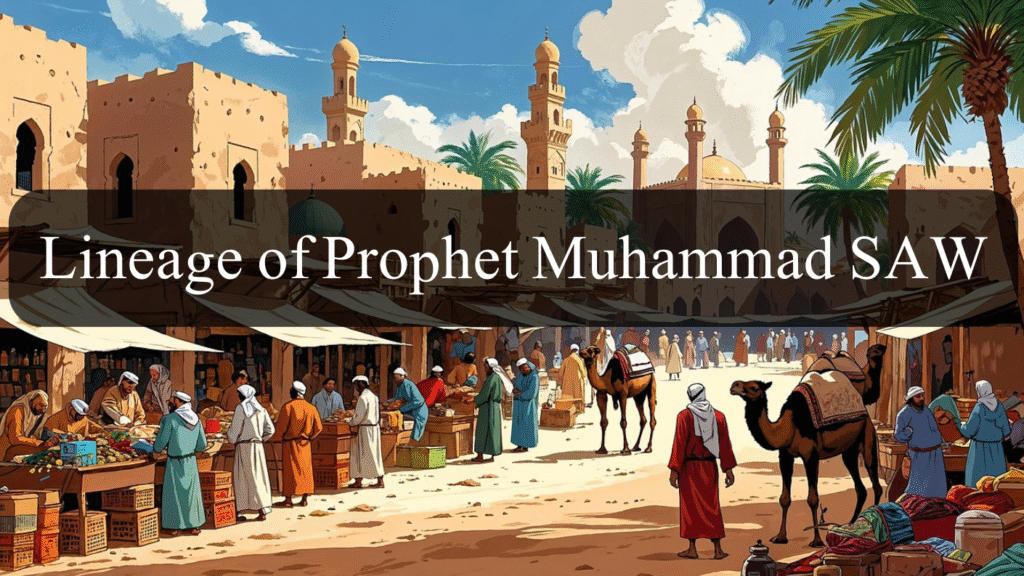
Lineage of Prophet Muhammad SAW

Lineage of Prophet Muhammad SAW

Lineage of Prophet Muhammad SAW

📜 Lineage of Prophet Muhammad SAW and Historical Background of Makkah

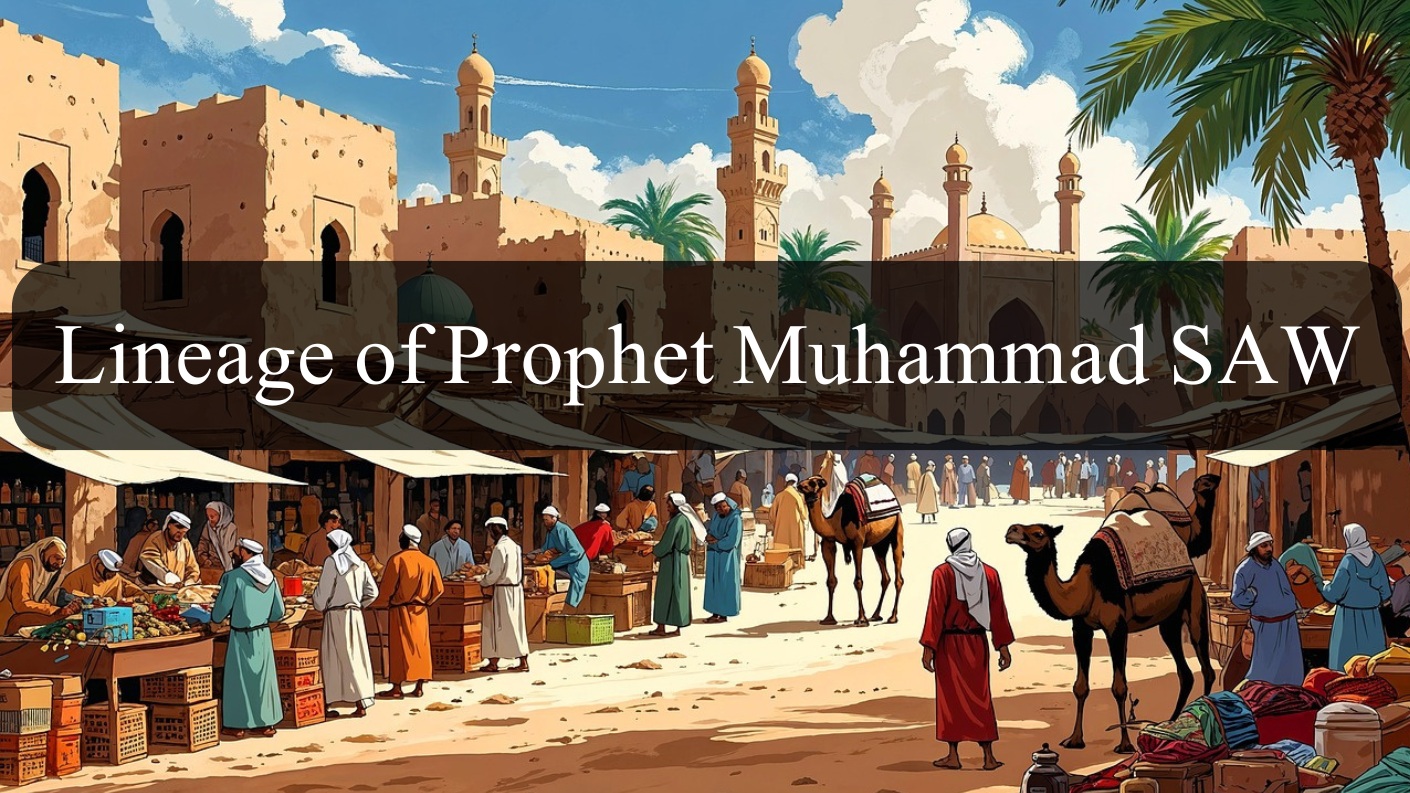
The Lineage of Prophet Muhammad SAW is a reflection of honor, nobility, and divine wisdom. He was not born randomly; Allah chose for His final Prophet a lineage of truth, leadership, and dignity that was well respected even before the message of Islam began.


🧬  Noble Lineage of Prophet Muhammad SAW

The Prophet Muhammad saw belonged to the Quraysh tribe, specifically the noble clan of Banu Hashim, known for their service to the Kaaba and their honesty. His family was not the wealthiest, but they were among the most respected.

His full lineage is traced back to Adnan, and through him, to Prophet Ismail (a.s.), son of Prophet Ibrahim (a.s.). This fulfills the long-standing prayer of Prophet Ibrahim:

“Our Lord, raise up in their midst a Messenger from among them…”
(Qur’an – Surah Al-Baqarah 2:129)

The genealogical line is as follows:
Muhammad ibn Abdullah ibn Abdul Muttalib ibn Hashim ibn Abd Manaf ibn Qusayy… ibn Adnan.

This connection to Prophet Ibrahim and Prophet Ismail reinforced Muhammad ﷺ’s credibility in Arab society and among followers of previous scriptures.


🕋 Makkah Before Islam – A Historical Overview

Before the arrival of Islam, Makkah was already a center of religious, social, and commercial activity. The Kaaba, built by Ibrahim and Ismail (a.s.), was surrounded by 360 idols and had become a place of polytheism.

Despite spiritual corruption, Makkah held unique influence due to:

  • Its central location on trade routes

  • The Kaaba drawing pilgrims from across Arabia

  • The Quraysh tribe maintaining authority and safety of travelers

However, Arab society was marked by tribal warfare, injustice, and inequality. Women were oppressed, orphans neglected, and moral values were declining.


🏛 The Quraysh and Banu Hashim’s Role

The Quraysh tribe had control of the Kaaba and played a dominant political and religious role. Among them, the Banu Hashim clan stood out for their leadership and integrity.

Banu Hashim was responsible for:

  • Providing food and water to pilgrims

  • Hosting the poor and travelers

  • Defending the sacred house (Kaaba)

Even enemies of the Prophet ﷺ admitted that he came from the best lineage. This honor made people listen to him even when they opposed his message.


👨‍👩‍👧‍👦  Social and Religious Conditions in Arabia

Arabia before Islam was known as the time of Jahiliyyah (ignorance). Some of the key features included:

  • Idolatry: People worshipped idols like Hubal, Lat, and Uzza.

  • Tribalism: Wars were fought over pride and revenge.

  • Moral Decline: Infanticide, especially of daughters, was common.

  • Disrespect for the weak: Slaves and orphans had no rights.

Yet, among this chaos, Allah was preparing a man who would change the course of human history.


📖 Why the Lineage of Prophet Muhammad SAW  Matters

  1. Trust and Leadership: Arab society valued lineage. His background gave him credibility and respect.

  2. Connection to Previous Prophets: Linking to Ibrahim (a.s.) gave religious significance to his mission.

  3. Fulfillment of Prophecy: People of the scriptures were expecting a prophet from among the descendants of Ismail.

  4. Moral Legacy: His forefathers were known for generosity, honor, and justice.

Understanding this background enriches our understanding of why Allah chose Prophet Muhammad ﷺ to be the Seal of Prophets.


📌 Conclusion

The Lineage of Prophet Muhammad SAW and the pre-Islamic background of Makkah are essential for understanding the beginning of Islam. His noble ancestry and the spiritual decay of his surroundings highlight the greatness of his mission and message.

Fazilat e Imam Ali
waqea mubahila,
Ali (A.S) aur Quran

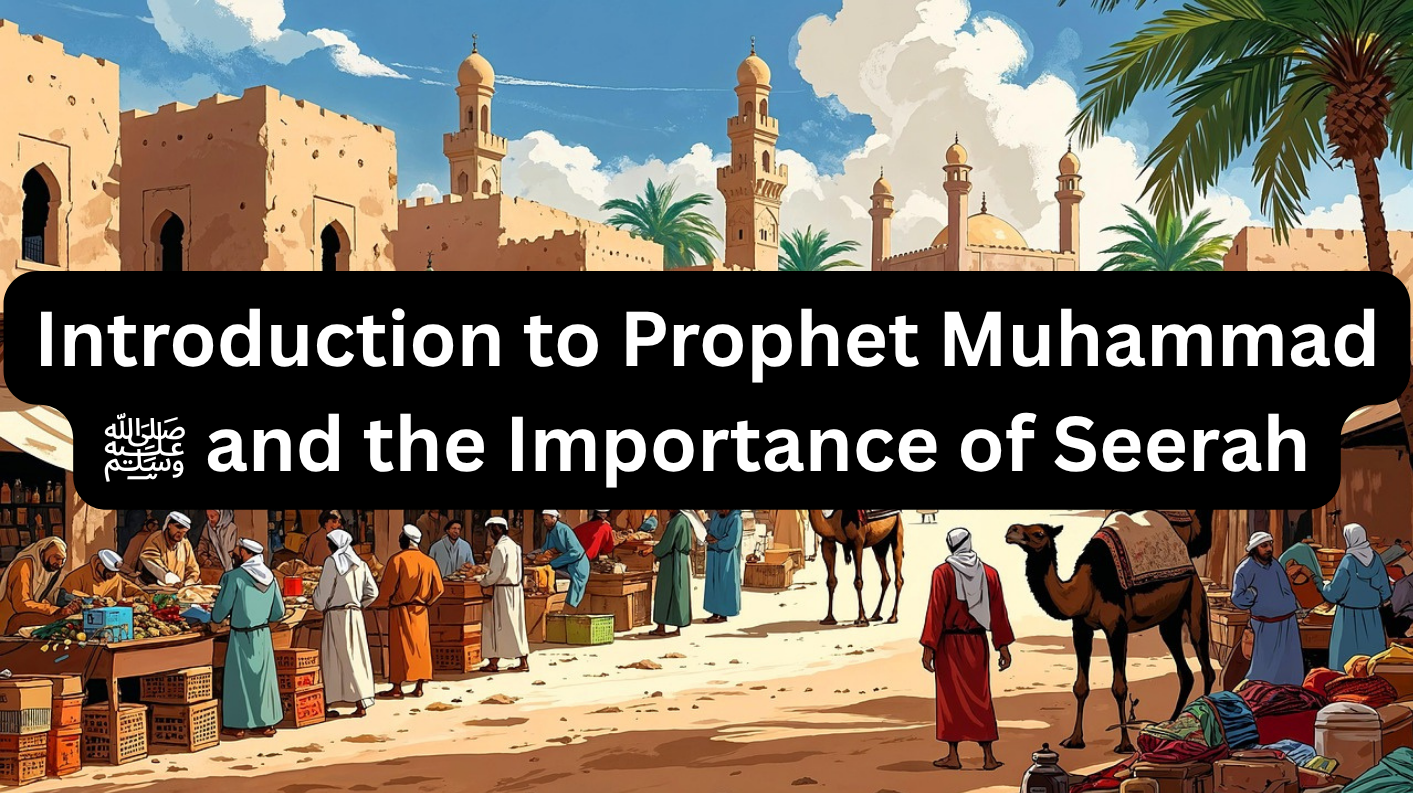
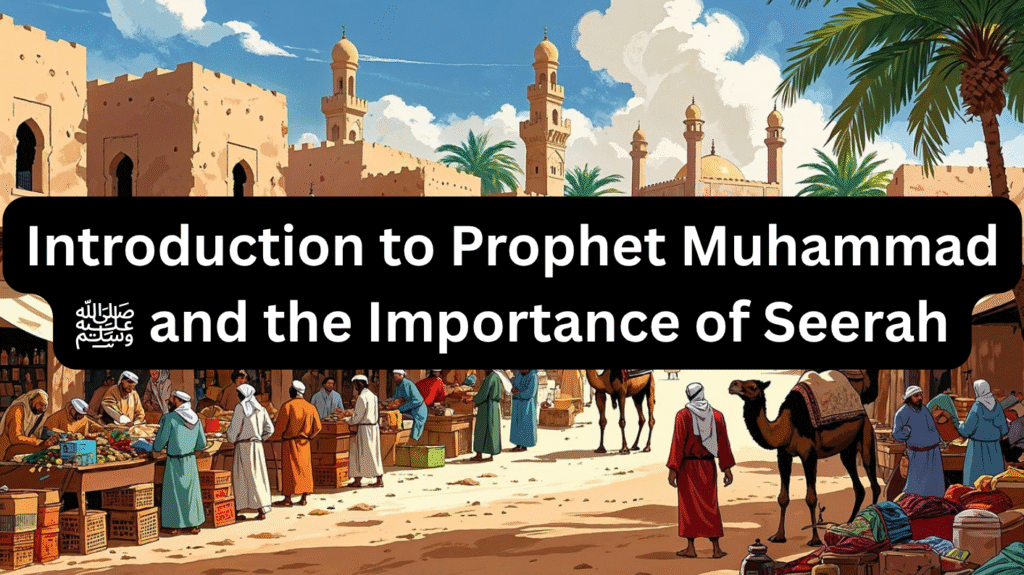
Introduction to Prophet Muhammad ﷺ and the Importance of Seerah

Seerah of Muhammad (SAW)

Seerah of Muhammad (SAW)

🌟 Introduction

Prophet Muhammad ﷺ is not only the final Messenger of Islam, but the perfect role model for all of humanity. His life is a comprehensive guide that provides spiritual light, ethical clarity, and practical leadership for every aspect of life.

“Indeed in the Messenger of Allah ﷺ, you have the best example.”
(Qur’an – Surah Al-Ahzab 33:21)

Understanding his Seerah (biography) is not merely a religious study — it is the key to living a meaningful, balanced, and morally upright life.

Who Was Prophet Muhammad ﷺ?

Prophet Muhammad ﷺ was born in the noble tribe of Quraysh, in the city of Makkah, in the year 570 CE, known as the Year of the Elephant (Aam al-Feel). His full name was Muhammad ibn Abdullah ibn Abdul Muttalib, and he came from the Banu Hashim clan — one of the most respected lineages in Arabia.

He was known by titles such as As-Sadiq (The Truthful) and Al-Ameen (The Trustworthy), even before he was given prophethood. At the age of 40, he received the first revelation from Allah through Angel Jibreel (Gabriel) while meditating in the Cave of Hira.

He passed away at the age of 63 in Madinah in the year 632 CE. He left behind a perfect example of personal, social, spiritual, and political excellence.


🕋 Quick Profile Summary

  • Name: Muhammad ibn Abdullah ﷺ

  • Tribe: Quraysh – Banu Hashim

  • Born: 12th Rabi’ al-Awwal, Year of the Elephant, Makkah

  • Father: Abdullah ibn Abdul Muttalib

  • Mother: Amina bint Wahb

  • Passed Away: 12th Rabi’ al-Awwal, 11 AH (632 CE), Madinah

  • Married to: Khadijah bint Khuwaylid (and others)

  • Children: 7 (including Fatimah, Hasan, Husayn)

  • Role: Last Prophet, Messenger of Allah

  • Book: The Holy Qur’an


🌍 Why Is Studying Seerah of Muhammad (SAW) Important?

  1. To Understand Islam Completely:
    The Qur’an provides the message, and the Prophet ﷺ’s Seerah provides the practical application of that message.

  2. To Follow a Perfect Human Model:
    In every aspect of life — as a leader, a father, a husband, a commander, a neighbor, or a teacher — Prophet Muhammad ﷺ showed the ideal behavior.

  3. To Strengthen Faith and Love for the Prophet ﷺ:
    Learning about his sacrifices, compassion, and mission develops emotional and spiritual connection.

  4. To Unite the Ummah:
    His life is the common ground for all Muslims. Seerah bridges cultural, ethnic, and sectarian gaps.

  5. To Face Modern Challenges:
    From social justice to personal ethics, Seerah offers timeless wisdom that applies even today.


💡 What We Will Learn in Seerah of Muhammad (SAW) Series

  • How a poor orphan changed the world with character and faith

  • The struggles and victories of the Prophet ﷺ

  • Lessons in patience, leadership, honesty, and mercy

  • The relationship between the Prophet ﷺ and Ahlul Bayt (his blessed family)

  • The message of peace and reform for all of humanity


📖 Studying Seerah is Not Just for Knowledge – It’s for Action

“The Seerah is a mirror — when you look into it, you should see who you are… and who you ought to be.”

The aim of this series is not just to inform, but to transform — to live our lives following the beautiful path shown by Prophet Muhammad ﷺ.


🧭 Who Is This Series For?

  • Students of Islamic history

  • Muslims seeking spiritual growth

  • Speakers, preachers, and teachers

  • Those who love the Prophet ﷺ and wish to follow his path

  • Anyone curious about the real life of Prophet Muhammad ﷺ