Ahl-e-Bayt

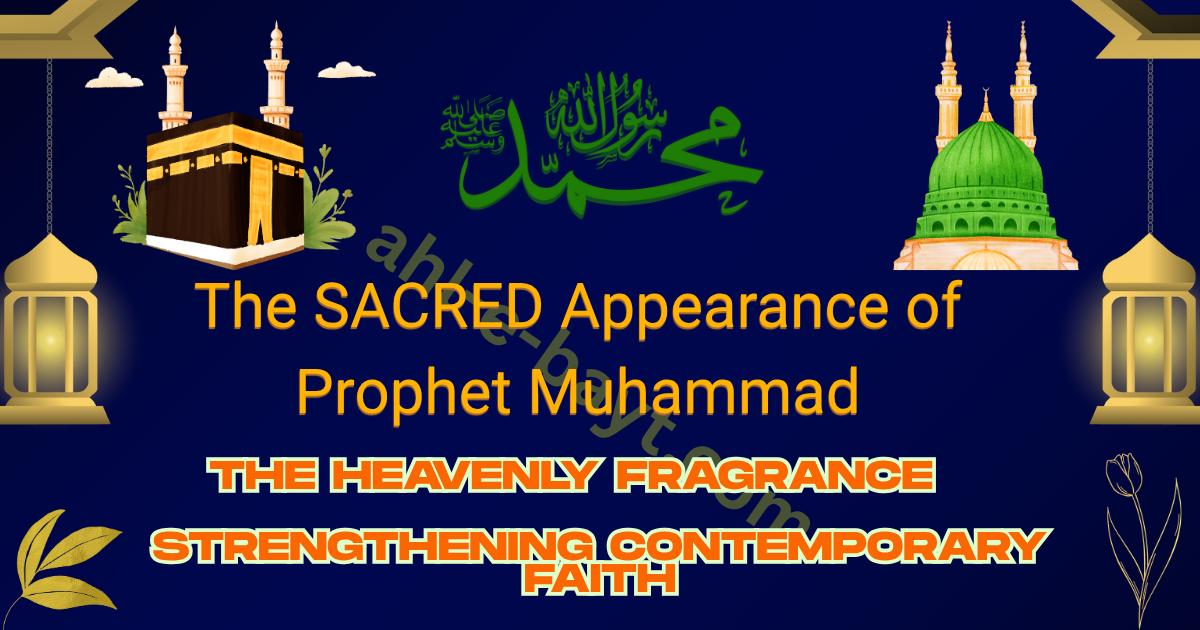
The Sacred Appearance of Prophet Muhammad ﷺ in the Stories of the Prophets

Stories of the Prophets

The Stories of the Prophets preserved in Islamic tradition collectively point toward the perfection of Allah’s final Messenger. Among these sacred narratives, the account of Prophet Muhammad ﷺ stands unique – not merely for its historical significance, but for how it perfectly combines physical beauty with spiritual grandeur. The Stories of the Prophets give us more than chronological records; they offer living inspiration that continues to shape Muslim identity centuries later.

When examining the Stories of the Prophets, we find Prophet Muhammad ﷺ described with unparalleled detail regarding his physical attributes. This isn’t accidental – Allah destined his appearance to manifest the completeness of his message. As we explore these descriptions, we’re not just learning facts, but connecting with the living sunnah that guides our practice today.


Comparative Analysis of Prophetic Attributes

1. Physical Stature Across the Stories of the Prophets

The Stories of the Prophets reveal how each messenger possessed distinctive physical traits suited to their mission:

  • Prophet Musa (AS): Remarkable strength for confronting Pharaoh

  • Prophet Yusuf (AS): Extraordinary beauty that tested nations

  • Prophet Muhammad ﷺ: Perfectly balanced features embodying moderation

His height (approximately 5’7″) represented the Islamic golden mean – neither intimidatingly tall nor insignificantly short. As Hazrat Ali (RA) noted: “He stood among people like a refined palm tree – neither towering over others nor dwarfed among them” (Bukhari). This physical balance mirrored his divinely-balanced character.

2. The Luminous Complexion in Prophetic Tradition

While the Stories of the Prophets describe various skin tones, Prophet Muhammad’s ﷺ radiance was unique:

  • Unlike Prophet Yusuf’s (AS) striking beauty that caused temptation

  • Different from Prophet Musa’s (AS) glowing face after divine communion

  • A constant, natural luminescence unaffected by circumstances

Hazrat Anas (RA) reported: “His face shone like the full moon, not from external light but from within” (Muslim). This wasn’t merely physical – it manifested his illuminated soul.


Exclusive Signs in the Stories of the Prophets

1. The Seal of Prophethood: A Divine Authentication

Among all Stories of the Prophets, this physical marker appears only for Prophet Muhammad ﷺ:

  • Location: Between his shoulder blades

  • Size: Approximately 3cm diameter

  • Texture: Like clustered moles with short hairs

  • Significance: Fulfilled Isaiah’s prophecy of the “sealed messenger”

Hazrat Jabir bin Samurah (RA) described: “I saw the seal – it resembled a small bird’s nest, raised slightly with fine hairs” (Muslim). This wasn’t merely a birthmark but divine confirmation for People of the Book.

2. The Heavenly Fragrance: A Perfume Beyond Nature

The Stories of the Prophets record scent-related miracles, but none compare to:

  • Source: His natural body fragrance, not applied perfume

  • Persistence: Remained on objects for weeks

  • Effect: Could be detected before his visible arrival

  • Spiritual Symbol: Represented the sweet “fragrance of iman”

Hazrat Anas (RA) recalled: “If he shook someone’s hand, the scent would linger on their palm for days” (Tirmidhi). This miracle authenticated his prophethood to skeptics.


The Living Legacy of These Descriptions

1. Connecting to Our Prophetic Heritage

These Stories of the Prophets serve as:

  • A bridge linking modern Muslims to our spiritual ancestry

  • Visual references for authentic artistic representations

  • Counter-narratives against orientalist distortions

2. Practical Applications Today

The Stories of the Prophets guide us to:

  • Maintain sunnah grooming standards

  • Balance physical care with spiritual development

  • Cultivate prophetic character traits

  • Appreciate Allah’s wisdom in human diversity

3. Strengthening Contemporary Faith

In an age of doubt, these accounts:

  • Provide tangible evidence of prophethood

  • Offer spiritual comfort through connection

  • Inspire emulation of perfect examples


A Dua From the Stories of the Prophets

“O Allah! As we reflect on these sacred Stories of the Prophets, bless us to recognize the beauty of Your final Messenger. Help us embody his noble characteristics in our appearance and conduct. Shower Your endless peace and blessings upon him, his family, and all the prophets. Amin!”
Join Us on Social Media

The Miraculous Journey of Isra and Miraj: A Divine Night of Wonders

isra and miraj

🌙 Introduction to Isra and Miraj

The event of Isra and Miraj (the Night Journey and Ascension) stands as Islam’s most awe-inspiring miracle. This divine expedition occurred in 621 CE on the 27th night of Rajab, demonstrating Allah’s absolute power and the elevated status of His final Messenger ﷺ. Historical accounts from Sahih Bukhari and Muslim confirm this journey was both physical and spiritual.

✨ The Two Phases of the Journey

1. Isra: From Makkah to Jerusalem

The first phase of Isra and Miraj began at the Kaaba:

  • Angel Jibreel (AS) awakened the Prophet ﷺ

  • Performed wudu with Zamzam water

  • Rode Buraq, a celestial steed faster than light

  • Traveled to Masjid al-Aqsa (Quran 17:1)

  • Led all prophets in prayer at the sacred mosque

This segment established Jerusalem’s significance in Islam and connected the Abrahamic faiths.

2. Miraj: The Cosmic Ascension

The Miraj portion represents the Prophet’s ﷺ journey through celestial realms:

The Seven Heavens

  1. First Heaven: Met Adam (AS), witnessed human souls’ destinations

  2. Second Heaven: Encountered Yahya (AS) and Isa (AS)

  3. Third Heaven: Saw Yusuf (AS), beauty incarnate

  4. Fourth Heaven: Met Idris (AS) among angels

  5. Fifth Heaven: Greeted Harun (AS) with divine light

  6. Sixth Heaven: Conversed with Musa (AS) about mercy

  7. Seventh Heaven: Met Ibrahim (AS) at Bait al-Ma’mur

🌠 Sidrat al-Muntaha: The Ultimate Boundary

Beyond the seventh heaven lay Sidrat al-Muntaha:

  • The Lote Tree marking creation’s limit

  • Where Jibreel (AS) could not proceed further

  • Direct divine communication occurred

  • Witnessed Paradise’s splendor and Hell’s warnings

🎁 Five Divine Gifts Bestowed During Isra and Miraj

  1. The Five Daily Prayers – Initially commanded as 50, reduced to 5 through Musa’s (AS) counsel

  2. Surah Al-Baqarah’s Final Verses – Protection against evil

  3. Intercession Rights – For the Ummah on Judgment Day

  4. Vision of Divine Signs – Affirming Allah’s majesty

  5. Strengthened Prophetic Resolve – Preparing for Hijrah

📜 Historical Context and Reactions

  • Makkah’s Disbelief: Quraysh mocked the journey until the Prophet ﷺ described Jerusalem’s caravans

  • Abu Bakr’s (RA) Faith: Earned “As-Siddiq” for immediate belief

  • Pre-Hijrah Significance: Boosted Muslim morale during persecution

💡 7 Modern Lessons from Isra and Miraj

  1. Allah’s Power Transcends Physics – Space/time limitations don’t bind the Divine

  2. Prayer is Spiritual Ascension – Each Salah mirrors the Prophet’s ﷺ journey

  3. Prophets’ Unity – All endorsed Muhammad’s ﷺ leadership

  4. Persistence Pays – Despite mockery, the truth prevailed

  5. Divine Mercy – Prayers reduced from 50 to 5 daily

  6. Jerusalem’s Status – Islam’s third holiest site

  7. Miracles Continue – Spiritual experiences remain possible

📖 Quranic and Hadith Evidence

Key Verses:

  • Surah Al-Isra 17:1 (The Night Journey)

  • Surah An-Najm 53:13-18 (Lote Tree Observation)

Authentic Hadiths:

  • Sahih Bukhari 349, 3207

  • Sahih Muslim 164, 234

🕌 Commemorating Isra and Miraj Today

While not an Islamic holiday, Muslims observe the 27th of Rajab by:

  • Extra night prayers (Tahajjud)

  • Studying the Sirah

  • Reflecting on Jerusalem’s liberation

  • Renewing commitment to Salah

🔍 Addressing Common Questions

Did Isra and Miraj Happen Physically?

Majority scholarly consensus affirms both body and soul ascended, though some Sufis emphasize spiritual aspects.

Why is Buraq Significant?

This heavenly creature symbolizes:

  • Speed of divine communication

  • Connection between earthly and celestial realms

  • Purity of prophetic missions

How Does Science Explain This?

Modern physics concepts like:

  • Wormholes (Einstein-Rosen bridges)

  • Quantum entanglement

  • Multiverse theory

offer fascinating parallels to Isra and Miraj’s transcendence of space-time.

📚 Recommended Resources

  1. The Sealed Nectar – Safiur Rahman Mubarakpuri

  2. When the Moon Split – Safiur Rahman Mubarakpuri

  3. Al-Isra wal-Miraj – Ibn Kathir

🌟 Conclusion: Living the Legacy

The Isra and Miraj miracle teaches us that:

  • Divine help arrives during hardship

  • Spiritual growth requires perseverance

  • Allah’s signs surround those who reflect

“O Allah! Make our prayers an ascension to Your pleasure, as You honored Your Beloved ﷺ on that blessed night. Ameen.”

Join Us on Social Media

Hazrat Abu Talib and the Year of Sorrow

abu talib

Abu Talib, the uncle of Prophet Muhammad (PBUH), was one of the Prophet’s strongest protectors during the early years of Islam. Though he never embraced Islam, his unwavering support shielded the Prophet from the brutal hostility of the Quraysh. The year in which Abu Talib passed away, along with the Prophet’s beloved wife Hazrat Khadija (RA), is known as Aam al-Huzn (The Year of Sorrow).

This period marked a significant emotional and strategic shift in the Prophet’s mission.


The Role of Abu Talib in Islam’s Early Struggle

Abu Talib, a respected chief of Banu Hashim, took care of the Prophet after the death of Abdul Muttalib. When the Prophet declared his Prophethood, Abu Talib stood by him even though he faced immense pressure from the Quraysh. His leadership prevented the Quraysh from killing the Prophet.

Even when the Quraysh demanded he hand over Muhammad (PBUH), Abu Talib firmly refused, saying:

“By Allah! They shall never reach you as long as I live.”

His protection was political and tribal vital in an era where clan loyalty determined survival.


The Loss of Abu Talib The Shield Breaks

In the 10th year of Prophethood, Abu Talib passed away, weakening the Prophet’s political cover in Makkah. Shortly afterward, Hazrat Khadija (RA) also passed away. Her emotional and financial support had been essential since the first revelation.

This dual loss crushed both the external protection and internal comfort of the Prophet.

The Quraysh, who had once been cautious due to Abu Talib’s presence, began to openly insult, mock, and physically harm the Prophet. In one incident, a man threw dirt on his head while he walked the streets of Makkah.

The Prophet (PBUH) said:

“Quraysh never caused me the same level of harm as they did after the death of Abu Talib.”


Hazrat Khadija’s Passing A Spiritual Grief

Hazrat Khadija (RA) was the Prophet’s first wife and the first person to accept Islam. She stood by him when no one else did, offering her wealth, trust, and love. Her home was the Prophet’s safe space during times of rejection and ridicule.

When she died at age 65, the Prophet lost his most devoted companion. He would remember her affection throughout his life and often mention her generosity and belief in him when others doubted him.


Why It Is Called “Aam al-Huzn” The Year of Sorrow

The loss of Abu Talib and Hazrat Khadija in the same year made 10th Nabawi one of the most painful years in the Prophet’s life. He not only lost loved ones but also faced rising hostility. His visit to Ta’if shortly after these deaths ended in public humiliation a clear indication that the tide had turned against him in Makkah.

This year came to be known as “Aam al-Huzn”, meaning “The Year of Sorrow”. It reflects both the emotional grief and the strategic hardship the Prophet endured.


Abu Talib’s Faith A Controversial Discussion

While Abu Talib did not openly accept Islam, scholars are divided. Some believe he died on the religion of his forefathers, while others argue that he may have believed secretly but remained quiet to preserve his political influence.

Regardless, his contributions to the protection of Islam are undeniable. Without his courage, the early Islamic movement might not have survived those critical years in Makkah.


The Aftermath Increased Challenges, Stronger Faith

After the Year of Sorrow, the Prophet’s hardships intensified. However, his trust in Allah only grew. He was soon rewarded with Isra and Mi’raj the miraculous night journey and ascension, which spiritually uplifted him after a year of suffering.


Legacy of Abu Talib and Hazrat Khadija

Both Abu Talib and Hazrat Khadija (RA) left a deep impact on the Prophet’s life and the early Islamic community. The Prophet (PBUH) honored their memories always, never forgetting their sacrifices.

“She (Khadija) believed in me when people disbelieved.”
“Abu Talib was my protector when I had no other.”


Conclusion

Abu Talib’s death marked the end of a protective era for Prophet Muhammad (PBUH), while Hazrat Khadija’s death marked the loss of emotional support and spiritual companionship. Together, these events made the Year of Sorrow (Aam al-Huzn) a year of severe trials. But it was also a year that prepared the Prophet for the next phase Hijrah to Madinah and the eventual rise of Islam.

Join Us on Social Media

The Acceptance of Islam by Hazrat Hamza (RA)

Hazrat Hamza

Hazrat Hamza (R.A.), famously known as “Asadullah” (The Lion of Allah), was among the earliest and bravest companions of Prophet Muhammad (PBUH). He was not only the Prophet’s paternal uncle but also a staunch supporter and fearless defender of Islam in its early years.


Early Life and Background

Hazrat Hamza ibn Abdul Muttalib was born in Makkah around 568 CE, into the noble Quraysh tribe of Banu Hashim. He was the son of Abdul Muttalib and thus the uncle of Prophet Muhammad (PBUH). Interestingly, Hazrat Hamza and the Prophet (PBUH) were not only uncle and nephew but also foster brothers; both were nursed by Thuwaybah, a freed slave woman.

From a young age, Hazrat Hamza developed a reputation as a skilled hunter, athlete, and warrior. His physical strength, courage, and chivalrous nature were widely respected among the Quraysh.


Conversion to Islam

Hazrat Hamza’s acceptance of Islam was a pivotal moment in the history of the Muslim community. His conversion came shortly after Prophet Muhammad (PBUH) began to preach Islam publicly. One day, Abu Jahl insulted and physically assaulted the Prophet at Mount Safa. When Hazrat Hamza heard of this incident upon returning from hunting, he was enraged. He went straight to Abu Jahl, struck him with his bow, and declared:

“I now follow the religion of Muhammad. Say what you will if you are brave enough!”

This moment marked not only his acceptance of Islam but also his public declaration as a protector of the Prophet. His support gave strength to the Muslim minority and shook the confidence of the Quraysh.


Role in the Early Islamic Struggles

Hazrat Hamza’s influence in Makkah helped shield Prophet Muhammad (PBUH) and the early Muslims from persecution. He stood tall in the face of oppression and became a symbol of courage and defiance against the tyrants of Quraysh.


The Battle of Badr

One of the most defining moments in the life of Hazrat Hamza was his participation in the Battle of Badr (2 AH / 624 CE), the first major battle in Islamic history. Hazrat Hamza fought valiantly and killed several key warriors of Quraysh, including Utbah ibn Rabi’ah, one of the most powerful enemies of Islam.

The courage and strength Hazrat Hamza displayed in Badr earned him legendary status among Muslims and furthered his title as the Lion of Allah.


Martyrdom in the Battle of Uhud

Tragedy struck during the Battle of Uhud (3 AH / 625 CE). Hazrat Hamza was martyred by Wahshi ibn Harb, a slave hired by Hind bint Utbah, who sought revenge for her father’s death at Badr.

Wahshi used a spear to strike Hazrat Hamza from a distance, fulfilling his task. After his death, Hind mutilated Hazrat Hamza’s body in an act of revenge, even cutting open his chest and removing his liver.

The Prophet Muhammad (PBUH) was deeply grieved upon seeing the condition of his beloved uncle and said:

“I have never been more grieved than I am today.”


Legacy of Hazrat Hamza

Hazrat Hamza’s sacrifice became a symbol of ultimate loyalty, bravery, and love for Islam. The Prophet (PBUH) titled him “Sayyid al-Shuhada” (Leader of the Martyrs).

Even today, Hazrat Hamza is remembered not just for his physical strength, but for his unwavering commitment to truth, justice, and the cause of Islam.


Conclusion

The life of Hazrat Hamza (R.A.) is a timeless example of how courage and faith can change the course of history. From a noble warrior of Quraysh to a lion-hearted martyr of Islam, his legacy lives on as a beacon of strength for Muslims around the world.

Join Us on Social Media

Social Boycott in Sha‘b Abi Talib

islam religion text

The Islam religion text faced one of its most severe trials during the social boycott in Sha‘b Abi Talib. After Quraysh’s failed attempts to silence the message of Prophet Muhammad (PBUH) through insults, threats, and torture, they escalated their opposition to an organized and cruel form of suppressiona full-blown social and economic boycott. This marked one of the most difficult and painful chapters in early Islamic history. Implemented in the 7th year of Prophethood, this boycott continued for nearly three years, bringing unimaginable hardship to the Prophet (PBUH), his family, and his loyal followers.


Background of the Boycott

As the number of Muslims steadily grew, the Qurayshi chiefs grew increasingly alarmed. The message of Islam religion text was not only gaining acceptance among the poor and enslaved but had begun entering influential households. Fearing loss of their religious authority and political control, Qurayshi leaders such as Abu Jahl, Abu Lahab, and Walid ibn al-Mughirah gathered at Dar al-Nadwah, the council hall of Makkah, to devise a plan to socially isolate the Prophet (PBUH).

They resolved to boycott:

  • Banu Hashim (the Prophet’s tribe)

  • Banu Muttalib (closely allied family)

The boycott included both Muslims and non-Muslims of those clans who supported Prophet Muhammad (PBUH) out of tribal loyalty. The Quraysh drafted a formal agreement and hung it on the wall of the Kaaba as a declaration of commitment.

Terms of the Boycott:

  • No trade or business dealings

  • No marriages between the clans and others

  • No social interactions or visits

  • No financial support or lending

(Reference: Seerah Ibn Hisham, Vol 1, p. 403)


Life Inside Sha‘b Abi Talib

The Prophet (PBUH), along with Abu Talib, Khadijah (RA), Ali (RA), and the rest of the Banu Hashim and Banu Muttalib, were forced to relocate to Sha‘b Abi Talib, a small valley with only one narrow entrance, located near the mountains of Makkah.

Living Conditions:

  • Food scarcity: Supplies were blocked. People survived on tree leaves, dried hides, and wild grass. (Al-Bidaya wa’l-Nihaya, Ibn Kathir, Vol 3)

  • Malnutrition and starvation became common. Children’s cries echoed in the valley due to hunger.

  • Complete isolation: No social visits, business interactions, or external communication.

  • Dangerous surveillance: Anyone attempting to help was threatened or punished.

Khadijah (RA), a wealthy and noble woman of Makkah, spent all her resources to feed the people in exile. Her sacrifice during this period greatly affected her health and led to her eventual death.


Acts of Secret Support

Despite the strict ban, a few noble-hearted Makkans tried to help secretly:

  • Hakim ibn Hizam (nephew of Khadijah): Secretly smuggled food and supplies through the mountains.

  • Hisham ibn ‘Amr, Zuhair ibn Abi Umayyah, Mut‘im ibn ‘Adi, and Abu al-Bakhtari were among those who later took steps to end the pact, opposing its cruelty.

(Reference: Dala’il an-Nubuwwah, Al-Bayhaqi, Vol 2)


The Miracle of the Eaten Scroll

When a few Makkans began to feel remorse over the boycott, they decided to bring it to an end. As they marched to the Kaaba to revoke the written agreement, Abu Talib informed the Quraysh that Prophet Muhammad (PBUH) had told him Allah had sent termites to eat away the parchment, sparing only the words: “In Your Name, O Allah.”

Upon checking, they found the pact completely destroyed, except for the blessed words. This miracle stunned the onlookers and shamed the Quraysh. The boycott officially ended.

(Reference: Seerah Ibn Hisham, Vol 1, p. 407)


Emotional and Physical Impact

The end of the boycott was a relief, but the damage had already taken its toll:

  • Khadijah (RA) passed away shortly after, weakened by years of sacrifice and hunger.

  • Abu Talib, the Prophet’s uncle and protector, also died the same year. His loss left the Prophet (PBUH) more vulnerable to attacks.

  • These events led to the naming of the year as ‘Aam al-Huzn (The Year of Sorrow).

Their deaths marked the end of a period of both protection and personal comfort for the Prophet (PBUH), yet his mission only grew stronger in resolve.


Spiritual Strength and Lessons

Despite the harsh boycott:

  • The believers remained steadfast in their commitment to Islam religion text.

  • The Prophet (PBUH) displayed unmatched patience, kindness, and hope in Allah’s mercy.

  • The boycott became a powerful testimony of sacrifice for the sake of truth.

This chapter of Seerah teaches us:

  • True faith demands resilience.

  • Social injustice must be confronted with unity and conviction.

  • Miracles reinforce faith in divine support during the darkest times.


Conclusion

The boycott in Sha‘b Abi Talib was not just a test of physical endurance, but of spiritual resolve. It brought hardship, loss, and suffering—but also revealed the strength of a unified, faith-driven community. Their suffering and endurance remain a beacon for Muslims today. The Prophet Muhammad (PBUH), even under extreme conditions, remained unwavering in his mission to spread the Islam religion text, laying the foundation for Islam’s eventual triumph across Arabia and beyond.


References

• Seerah Ibn Hisham, Vol 1, pp. 403/407
• Al-Bidaya wa’l-Nihaya – Ibn Kathir, Vol 3
• Dala’il an-Nubuwwah – Al-Bayhaqi, Vol 2
• The Holy Qur’an

Join Us on Social Media

Islam Religion Text: Opposition of the Quraysh

islam religion text

Islam Religion Text: Opposition of the Quraysh

After the declaration of Prophethood, the Messenger of Allah (PBUH) faced fierce opposition, insults, and both physical and mental torture from the Quraysh of Makkah. His message of monotheism, justice, equality, and rejection of idol worship challenged the very core of their social and religious systems. The tribal chiefs feared the collapse of their inherited religion and commercial interests. This period highlights how the Islam religion text faced suppression from its earliest days.


Initial Reaction of the Quraysh

Initially, the Quraysh leaders ignored the Prophet (PBUH) and did not take his message seriously. But as Islam began to spread among different segments of Makkah—especially the slaves, youth, and oppressed—the Quraysh’s pride and vested interests were shaken.

The Qur’an describes their reaction:

“And they say: This is a magician, a liar. Has he made all the gods into one God? Indeed, this is a strange thing.” (Surah Sad, 38:4–5)


Forms of Insult and Harassment

1. Verbal Abuse

• (Adh-Dhariyat: 39, At-Tur: 29) The Prophet (PBUH) was called “madman,” “sorcerer,” “soothsayer,” and “poet.”
• (Surah Al-Anfal: 31) The Qur’an was dismissed as “tales of the ancients.”
• (Fussilat: 26) The disbelievers said: “Do not listen to this Qur’an and make noise during its recitation.”

2. Social Boycott

• The Prophet (PBUH) and his followers were cut off from tribal and family ties.
• They faced economic, trade, and marital bans. (Seerah Ibn Hisham, Vol 1, p. 375)

3. Physical Persecution

• Camel intestines were thrown on the Prophet (PBUH) while he prayed. (Sahih Bukhari, Hadith 240)
• Thorns were placed in his path, and filth was thrown at him.
• When Abu Bakr (RA) tried to defend the Prophet (PBUH), he was beaten until unconscious. (Al-Bidaya wa’l-Nihaya, Vol 3, p. 29)


Role of Abu Lahab, Abu Jahl, and Other Leaders

Abu Lahab

• Though the Prophet’s (PBUH) uncle, he was a fierce enemy of Islam.
• He was condemned in the Qur’an:

“Perish the hands of Abu Lahab…” (Surah Al-Masad: 1)
• His wife, Umm Jamil, used to scatter thorns in the Prophet’s path. (Tafsir Ibn Kathir)

Abu Jahl

• The most arrogant leader of Quraysh who plotted the Prophet’s (PBUH) death repeatedly.
• He was killed in the Battle of Badr. (Seerah Ibn Hisham, Vol 2, p. 230)

Other Enemies

• Walid ibn al-Mughirah: Called the Qur’an magic. (Surah Al-Muddathir: 24–25)
• ‘As ibn Wa’il and ‘Uqbah ibn Abi Mu’ayt: Mocked the Prophet (PBUH) and spat on him. (Dala’il an-Nubuwwah, Al-Bayhaqi, Vol 2, p. 191)


Temptations Offered to the Prophet (PBUH)

The Quraysh offered the Prophet (PBUH) worldly temptations to abandon his mission:

• Leadership of Makkah
• Wealth and gold
• Medical treatment for his “condition”

The Prophet (PBUH) replied:

“If they place the sun in my right hand and the moon in my left, I will never abandon the message of Allah.” (Seerah Ibn Hisham, Vol 1, p. 293)


Persecution of the Companions (RA)

• Bilal al-Habashi (RA) was laid on burning sand with stones on his chest. (Al-Isabah, Vol 1, p. 169)
• Yasir (RA) and Sumayyah (RA) were martyred — Sumayyah being the first female martyr in Islam. (Al-Isti’ab, Vol 4, p. 1806)
• Khabbab ibn al-Aratt (RA) was burned with hot coals. (Sahih Bukhari, Hadith 3855)


The Prophet’s (PBUH) Response: Patience, Prayer, and Wisdom

The Prophet (PBUH) never retaliated with violence. Instead, he showed unmatched patience, noble character, and sincere prayers.

He once said:

“O Allah! Guide my people, for they do not know.” (Sahih Muslim, Hadith 1792)


Results and Impact

The more the Quraysh resisted, the faster Islam spread. It gave hope to the weak and the oppressed. The Prophet’s (PBUH) truthfulness, character, and resilience won hearts across Makkah. This marked a pivotal phase in the survival and growth of the Islam religion text despite enormous opposition.

The Qur’an affirms:

“And We have not sent you, [O Muhammad], except as a mercy to the worlds.” (Surah Al-Anbiya: 107)


References

• Sahih Bukhari: Hadiths 240, 3855
• Sahih Muslim: Hadith 1792
• Seerah Ibn Hisham: Volumes 1 & 2
• Al-Bidaya wa’l-Nihaya: Ibn Kathir, Vol 3
• Dala’il an-Nubuwwah: Al-Bayhaqi, Vol 2
• Al-Isabah: Ibn Hajar
• Al-Isti’ab: Ibn ‘Abd al-Barr
• Tafsir Ibn Kathir
• The Holy Qur’an: Surah Sad, Al-Anfal, Fussilat, Al-Masad, Al-Muddathir, Al-Anbiya


Conclusion

The opposition from Quraysh was not trivial or momentary—it was an organized, harsh campaign aimed at silencing the call to Islam. Yet, the Prophet (PBUH) responded with unparalleled patience, mercy, and determination.

His example teaches us that facing trials for truth is part of the divine mission, and perseverance leads to victory. His Seerah remains the ultimate guide for all who face resistance on the path of righteousness, especially in preserving and spreading the Islam religion text.

Join Us on Social Media

The Declaration on Mount Safa

Islam prophets

Islam prophets brought guidance to humanity in different eras, and the message of Islam, which began quietly and privately, entered a new phase after three years: the Public Call to Islam. At this point, the Prophet Muhammad (PBUH), under divine instruction, called his people openly towards the worship of one God and the rejection of idolatry. This moment—standing on Mount Safa—marked a turning point in the history of Islam and the life of the Prophet. It was a monumental act of courage, clarity, and truth that would forever shape the message of Islam.


Divine Command to Islam Prophets to Go Public

After three years of secret preaching and developing a core group of sincere followers, Prophet Muhammad (PBUH) received a clear command from Allah:

“And warn your closest kindred.” (Surah Ash-Shu‘ara: 214)

This divine order marked a shift in the prophetic mission. The Islam prophets, especially Muhammad (PBUH), were never passive messengers. Their duty was to deliver the truth with wisdom and resilience, even if it meant facing opposition. By obeying this command, the Prophet (PBUH) took the first step in confronting the falsehood and injustice that had deeply embedded itself in Makkah’s culture.


Mount Safa – A Historic Stand by the Islam Prophets

In a powerful and symbolic gesture, the Prophet (PBUH) climbed Mount Safa—a well-known elevation near the Kaaba in Makkah used traditionally for important announcements. It was a strategic place to capture the attention of every tribe and family in the city.

He called out loudly to each of the major tribes of Quraysh by name. This was not merely a gathering; it was a serious call to reflection and truth.

“O Banu Fihr! O Banu Adi! If I were to tell you that an army is advancing to attack you from behind the mountain, would you believe me?”

They replied: “Yes, we have never known you to lie.”

Then the Prophet (PBUH) said:

“I am a warner to you before a severe punishment. I have come to you with a clear message from Allah. Save yourselves from the Fire!”

This moment was one of the most significant public stands taken by any of the Islam prophets, as it directly challenged the core beliefs of an idolatrous society.


Reaction from Quraysh

The message pierced the pride and tradition of the Quraysh. The open call to abandon idols, tribal arrogance, and ancestral customs in favor of one true God was not only unexpected but deeply offensive to the leaders of Makkah. The most vocal and immediate response came from his own uncle:

Abu Lahab angrily interrupted: “May you perish! Did you gather us here just for this?”

This insult was a blatant rejection of the Prophet’s (PBUH) sincerity. Allah immediately revealed:

Surah Al-Masad, a harsh rebuke of Abu Lahab and his enmity.

Following this, the Quraysh intensified their efforts to oppose Islam. They began to publicly mock, threaten, bribe, and even torture those who followed the Prophet (PBUH). The climate of hostility escalated rapidly, turning Makkah into a battleground of belief and disbelief.


The Courage of the Islam Prophets | Especially Prophet Muhammad (PBUH)

The Prophet Muhammad (PBUH) stood as a model of patience and determination, traits shared by all Islam prophets. Despite the growing threats, he did not falter. He knew his mission was divinely appointed and that he walked the path of earlier prophets like Ibrahim (A.S.), Musa (A.S.), and Isa (A.S.).

His message was not political or materialistic it was deeply moral and spiritual:

  • Worship one God alone

  • End injustice and exploitation

  • Abandon idol worship

  • Live with compassion, fairness, and integrity

He did not raise weapons or provoke violence—his power was in truth, words, and character. He encouraged his followers to endure suffering with patience, and this steadfastness became a hallmark of Islamic dawah.


Impact of the Public Call by Islam Prophets

  1. Clear Divide Created: People could no longer stay neutral. They had to choose between embracing truth or clinging to falsehood.

  2. Islamic Identity Formed: The followers of Muhammad (PBUH) began to form a visible, distinct group bound by faith, not tribe or bloodline.

  3. Opposition Intensified: Makkah’s elite viewed Islam as a threat to their power and began social and physical persecution of Muslims.

  4. Hearts Were Stirred: Many who initially ignored the message became curious. Some were moved by the Prophet’s honesty and character.

  5. Legacy Began: This public declaration planted the seeds of a faith that would one day span continents.


Conclusion

The Declaration on Mount Safa was a turning point not just in the life of Prophet Muhammad (PBUH), but in the story of all Islam prophets. It was a moment when truth was declared boldly in the face of disbelief. It reminds us that real change starts with a voice of courage standing alone if necessary.

Among all Islam prophets, Muhammad (PBUH) emerged as the Seal of the Prophets, and his public call to Islam was the spark that ignited a spiritual revolution whose flame still burns in the hearts of billions today.


Join Us on Social Media

The Secret Phase of Preaching| prophets in islam

prophets in islam

Prophets in Islam from Adam (A.S) to Noah (A.S), Ibrahim (A.S), Musa (A.S), and Isa (A.S) delivered divine guidance to their people. But none has influenced the world like Prophet Muhammad (PBUH), the final messenger. This article explores how the Islam religion text began to spread secretly in the early years, who the important people in Islam were at this stage, and what this period means in the grand history of Islam.


The First Revelation and Beginning of Prophethood

In 610 CE, in the Cave of Hira near Makkah, Prophet Muhammad (PBUH) received the first revelation through the angel Jibreel (Gabriel). The words “Iqra’ bismi rabbika alladhi khalaq” (“Read in the name of your Lord who created…”) marked the beginning of the Islam religion text, now known as the Quran. This event was a turning point in the spiritual history of mankind and the first step in the mission of the final Prophet of Islam.


The Secret Phase of Preaching (610–613 CE)

For the first three years, Prophet Muhammad (PBUH) preached Islam secretly. He was commanded to spread the message cautiously to avoid the immediate backlash of the Quraysh, who were deeply rooted in idol worship.


Why Secrecy?

  • Makkah was hostile to any challenge to its religious structure.

  • The early Muslims were few in number and had no political or tribal support.

  • Secrecy allowed the message to reach people slowly, sincerely, and safely.


Important People in Islam During the Secret Phase

Some of the most important people in Islam accepted the religion during this phase. Their courage and faith laid the foundation for what would become a global faith.

1. Khadijah bint Khuwaylid (RA)

  • The first believer in Islam.

  • Wife of Prophet Muhammad (PBUH) and his greatest emotional and financial support.

  • Her faith and loyalty gave the Prophet (PBUH) immense strength.

2. Ali ibn Abi Talib (RA)

  • The first child to accept Islam.

  • Raised in the Prophet’s household.

  • Became one of the most knowledgeable and courageous companions.

3. Abu Bakr As-Siddiq (RA)

  • The first adult male to embrace Islam.

  • A key figure among the companions and later the first Caliph.

  • Through his efforts, many influential people also became Muslims.

4. Zayd ibn Harithah (RA)

  • The adopted son of Prophet Muhammad (PBUH).

  • Among the first to pray with the Prophet (PBUH).

5. Uthman ibn Affan (RA) and Abdur Rahman ibn Awf (RA)

  • Wealthy and respected companions who embraced Islam early and supported it with their wealth.


The Role of Dar al-Arqam

As more people embraced Islam, Prophet Muhammad (PBUH) chose a safe location for teaching and prayer: Dar al-Arqam  the house of Arqam ibn Abi Arqam near Mount Safa.

  • It became the first Islamic center.

  • Here, new converts learned about the Islam religion text (Quranic revelations).

  • It served as a training ground for future leaders of Islam.


Key Themes in Early Islam

The early teachings focused on:

  • Tawheed (Oneness of God)

  • Akhlaq (Character and morality)

  • Life after death

  • Justice and equality

  • Prayer and worship

These concepts were radical at the time, challenging tribalism, idol worship, and economic exploitation.


Quranic Verses Revealed During This Time

The early verses of the Quran were short, poetic, and powerful. They addressed:

  • The majesty of Allah (e.g. Surah Al-Alaq, Surah Al-Muddathir)

  • Reflection on nature and creation

  • Warnings against arrogance and injustice

These verses formed the foundation of the Islam religion text, which would continue to be revealed over 23 years.


Reactions of Quraysh

Even during this secret phase, rumors about a new message began to spread. The Quraysh grew concerned, especially when respected figures started converting to Islam.

However, because the message was still private and had not challenged the Quraysh publicly, they did not yet respond with full force.


Strategic Wisdom of Prophet Muhammad (PBUH)

Prophet Muhammad (PBUH) showed immense wisdom during this phase:

  • He personally invited trustworthy individuals.

  • He avoided public gatherings that could trigger conflict.

  • He focused on building a core group of faithful believers.

This laid a strong base for the later, more public mission.


The End of the Secret Phase

After nearly three years, Prophet Muhammad (PBUH) received the divine command:

“And warn your closest kindred.” (Quran 26:214)

This marked the transition from private preaching to public dawah, beginning a new and more challenging chapter.


Legacy of the Early Preaching Phase

  • Introduced the world to the final Prophet of Islam.

  • Built the first Muslim community.

  • Proved that real change begins with faith, patience, and people – not power.

  • Highlighted the bravery of the important people in Islam who embraced truth despite danger.


Conclusion

The early preaching of Islam was a period of silence, strength, and strategy. It reminds us that even the greatest missions begin quietly, with conviction in the heart and trust in God.

From the first words revealed in the Islam religion text, to the earliest believers who shaped the ummah, this phase is one of the most powerful chapters in the story of Islam.

Join Us on Social Media

The Declaration of Prophethood|Islamic Prophets

Islamic Prophets

Islamic Prophets have guided humanity throughout history, each delivering a message of divine truth. Among them, Prophet Muhammad ﷽ stands as the final and greatest messenger, completing the legacy of all who came before him. At the age of 40, he received his first revelation, a moment that marked the beginning of a global spiritual revolution.

This post explores that divine moment and how it defined his role among the most revered Islamic Prophets.


The Mission of Islamic Prophets Before Prophet Muhammad ﷽

Before Prophet Muhammad ﷽, a long line of Islamic Prophets had come with messages of guidance, monotheism, and moral reform. From Adam to Nuh (Noah), from Ibrahim (Abraham) to Musa (Moses), and Isa (Jesus), each was sent to lead their people toward truth and righteousness.

Their missions, though distinct in detail, shared core themes:

  • Worship of one God

  • Justice and compassion

  • Truth and patience

  • Calling people away from idol worship and corruption

Prophet Muhammad ﷽ was chosen to complete and seal this chain of Prophets with the final revelation.


Revelation Begins in Cave Hira

In the spiritually barren environment of Makkah, where idol worship and injustice were rampant, Prophet Muhammad ﷽ would retreat to Cave Hira for reflection and worship.

There, during the month of Ramadan, Angel Jibreel (Gabriel) 💚 appeared and commanded:

“Iqra!” (Read!)

The Prophet ﷽, unlettered, responded:

“I am not one who can read.”

After three repetitions and a firm embrace, the first verses of Surah Al-‘Alaq were revealed:

“Read in the name of your Lord who created…”

This marked the beginning of the Qur’an, the final divine book, and a new chapter in the story of Islamic Prophets.


Support from Family and Early Believers

Overwhelmed by the experience, the Prophet ﷽ returned home to Khadijah bint Khuwaylid رضی اللہ عنہ, who comforted and reassured him. She became the first believer.

Khadijah took him to her cousin Waraqah ibn Nawfal, a knowledgeable Christian. Waraqah confirmed the experience:

“This is the same angel who came to Musa (Moses). If I live to see your mission, I will support you.”

Among the early believers were:

  • Khadijah (his wife)

  • Ali ibn Abi Talib (his cousin)

  • Zayd ibn Harithah (his adopted son)

  • Abu Bakr as-Siddiq (his close friend)

Through Abu Bakr, others like Uthman, Talha, and Zubair accepted Islam.


The Early Call of an Islamic Prophet

For the first three years, the Prophet ﷽ called people to Islam secretly. These years were about:

  • Building trust and faith

  • Teaching core values: monotheism, kindness, humility

  • Avoiding open conflict with Quraysh

The focus of this period was on strengthening hearts.


Public Declaration of Islam and Its Impact

Then came the command:

“Proclaim openly what you are commanded…” (Qur’an 15:94)

The Prophet ﷽ ascended Mount Safa and gathered the Quraysh tribes. He asked:

“If I told you an army was behind this hill, would you believe me?”

They said, “Yes. You are Al-Ameen.”

He then said:

“I am a warner to you before a severe punishment.”

Abu Lahab, his uncle, mocked him. In response, Allah revealed:

“Perish the hands of Abu Lahab…” (Surah Al-Masad)

This public call sparked strong reactions, marking a bold phase in the Prophet’s mission as one of the final Islamic Prophets.


Opposition and Steadfastness

As the message spread, so did opposition. The Quraysh tried to:

  • Bribe the Prophet ﷽ with wealth and status

  • Intimidate and torture believers

  • Boycott Muslims

  • Spread false propaganda

Still, the Prophet ﷽ stood firm, saying:

“Even if they placed the sun in my right hand and the moon in my left, I would never abandon this mission.”

This shows the same determination shared by previous Islamic Prophets, who never compromised truth.


Lessons from the Life of the Greatest Islamic Prophet

The declaration of Prophethood teaches us that:

  • Truth always meets resistance

  • Patience is a sign of strength

  • Support from loyal companions is a mercy

  • A small, sincere group can bring massive change

  • One man can illuminate the world when guided by divine light


Conclusion: A Light for All Humanity

The declaration of Prophethood was a defining moment not only in the life of the Prophet Muhammad ﷽ but in the mission of all Islamic Prophets. It was the final echo of divine guidance that sealed centuries of revelation.

Today, we continue to learn, reflect, and grow from this light.

Share this post so others may connect with the message of the final Prophet ﷽ and the legacy of all Islamic Prophets.

Join Us on Social Media

Among the Greatest Islamic Prophets

Islamic prophets

Early Life of Prophet Muhammad ﷺ  Among the Greatest Islamic Prophets

Prophet Muhammad ﷺ, the final messenger in the line of Islamic prophets, was born in 570 CE in the holy city of Makkah. His early life holds deep spiritual, emotional, and historical importance not just for Muslims, but for anyone studying the Islam religion and its divine lineage of messengers.


His Birth and Noble Lineage

The Prophet ﷺ was born into the respected Quraysh tribe, specifically the Banu Hashim clan. His father, Abdullah, passed away before he was born, and his mother, Amina bint Wahb, nurtured him during his early infancy. At birth, he was named Muhammad, meaning “the praised one.”

According to authentic narrations, his grandfather Abdul Muttalib took responsibility for naming and protecting him. These early days were filled with the love of a family who knew they were raising someone destined for greatness.


Foster Care with Halima Saadia

In Arabian tradition, noble families would often send their newborns to the desert to be raised in a healthier environment. The Prophet ﷺ was given into the care of Halima Saadia from the Banu Saad tribe. During her care, her household witnessed unprecedented blessings — their livestock flourished, and their home was filled with barakah (divine blessings).

Halima grew to love the Prophet ﷺ as her own child. She once said, “From the moment he entered our home, everything changed.”

This phase of the Prophet’s life, under Halima’s care, shows the early signs of his divine selection among the Islamic prophets.


The Incident of the Opened Chest (Shaqq al-Sadr)

One of the most well-known events during his early childhood is the splitting of his chest by angels. This incident, witnessed by Halima’s son, terrified her family, and she eventually returned the young Muhammad ﷺ to his mother. Scholars mention this as a symbol of divine purification, a key moment showing he was being prepared for future prophethood.


Return to His Mother and Grandfather

At around 4 or 5 years old, he was reunited with his mother Amina. She took him to visit Yathrib (later Madinah), where she showed him the graves of his father and relatives. Sadly, on their return journey, she fell ill and passed away in Abwa. The Prophet ﷺ became an orphan.

His care was then passed to his grandfather, Abdul Muttalib, who showed him deep affection. Two years later, after Abdul Muttalib’s death, he came under the care of his uncle Abu Talib.


Lessons from the Prophet’s Early Life

The early life of Prophet Muhammad ﷺ reflects not only his personal strength and patience but also how Allah prepared him for his final mission. Unlike many other Islamic prophets, the Prophet ﷺ faced complete orphanhood, yet his character remained pure and strong.

His connection to earlier Islamic prophets such as Ibrahim (Abraham), Musa (Moses), and Isa (Jesus) is a continuation of divine revelation. The Islam religion teaches that all prophets were sent with the same core message: to worship one God and live with justice, kindness, and mercy.


Conclusion

Prophet Muhammad ﷺ’s early life — filled with trials, loss, and divine care — is a foundational chapter in the Seerah and a significant part of the lives of Islamic prophets. Understanding his childhood helps us appreciate how Allah shapes His messengers to lead and guide humanity.

In the next post, we will explore the teenage years and early adulthood of the Prophet ﷺ, focusing on his honesty, integrity, and work as a trader — all while preparing for his final mission in the Islam religion.